
A History Older Than Radio Ads
In 1967, in a bar in San Antonio, a pilot and a businessman sketched a triangle on a paper napkin. It connected three cities: Dallas, Houston, San Antonio. That sketch became the idea for Southwest Airlines. Similarly, screenwriter Aaron Sorkin wrote lines for A Few Good Men while working as a bartender, also on napkins. This isn’t a coincidence: a napkin is the one object on the table people pick up for free, without any particular reason, and often carry away with them. In fact, it’s a small but telling detail in napkin advertising history- one that started long before most of today’s marketing channels existed.
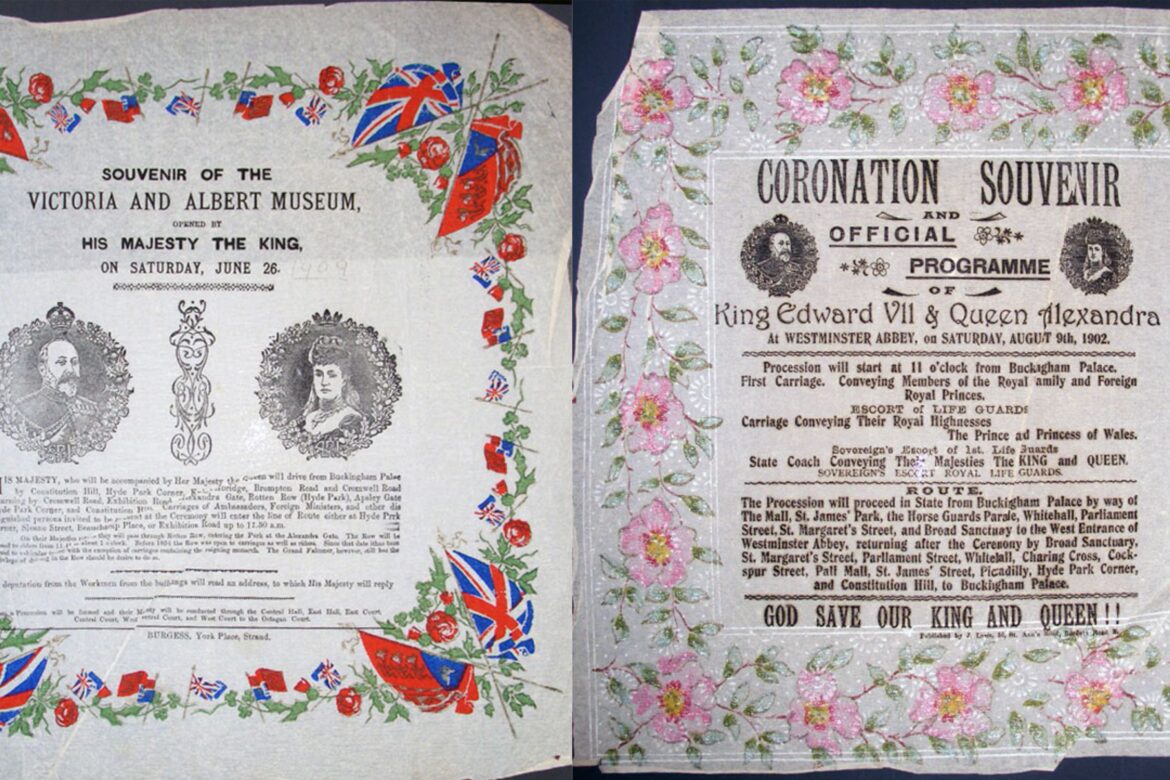
Brands figured this out earlier than you’d expect. Back in 1887, the British company John Dickinson Ltd. began printing logos on napkins it had originally imported from Japan as a decorative item. As a result, one of the first “souvenir” napkins with an advertising layer was born. In other words, branded napkins predate radio advertising, neon signs, and most of the formats we now consider standard. However, this early chapter of napkin advertising history is easy to overlook, simply because the medium itself looks so unassuming.
A Medium That Asks for Nothing
Even so, the mechanic hasn’t changed in almost 140 years. A napkin is an advertising medium that asks nothing of the person holding it: no scanning, no swiping, and no closing a banner. Instead, the message simply ends up in someone’s hands- while they wait for their order, chat with a friend, or photograph the table for social media.
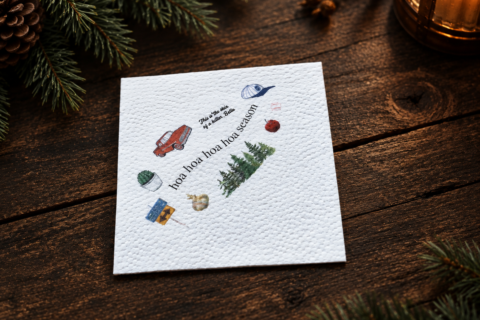
Chipotle, for instance, uses a similar principle. Its kraft napkins carry a logo on one side, and on the other, a short, wry story about paper recycling. This way, the chain turned a purely functional, hygienic item into a small carrier of brand voice- no banners, no ad spend, just text placed in front of someone at the exact moment they’re not in a hurry and have nothing else to do.
Why the Brain Remembers One Detail and Not the Rest
There’s also a simpler explanation here, and it’s not historical but neuropsychological. In 1933, German psychiatrist Hedwig von Restorff ran an experiment: she showed people a list of similar items, with one item that stood out from the rest. Later, participants remembered that one distinct item far better than any of the others, while the rest blurred together in memory. Consequently, the effect was named after her- the von Restorff effect, or isolation effect. Put simply, the brain doesn’t remember what repeats; it remembers what breaks the pattern.
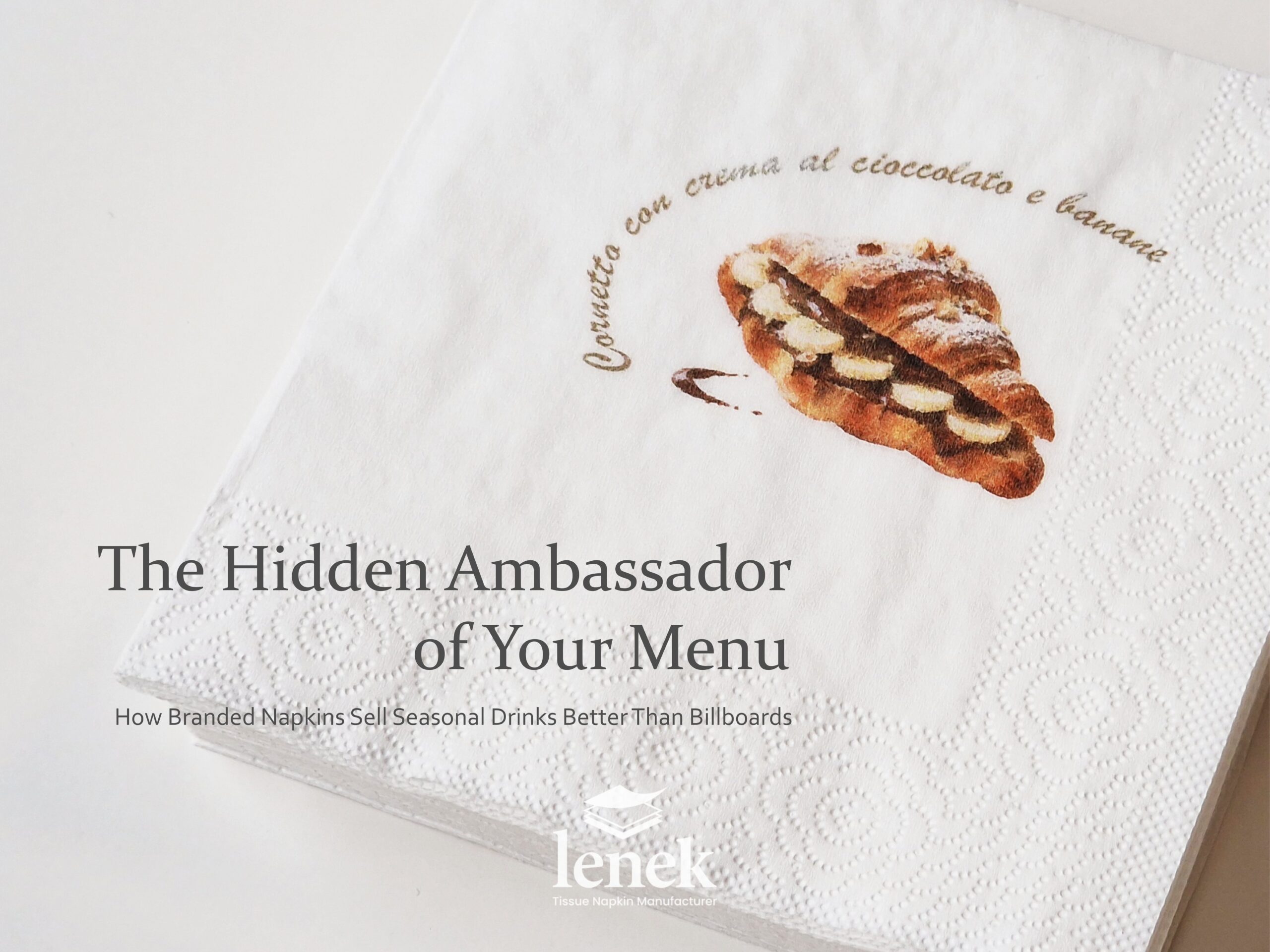
A café table, in essence, is exactly that kind of uniform row of objects: matching plates, matching cutlery, and a plain white napkin nearly identical to what’s on every other table in the neighborhood. Because of this, the brain tends to skip right past it- a plain white napkin looks like hundreds of others it has already seen. Yet once one non-standard element appears in that uniform row, the brain latches onto it automatically, and that’s the detail people end up remembering.
An Old Format, Built for How Memory Works
All things considered, this makes for an interesting coincidence: the oldest advertising medium happens to align perfectly with how memory actually works. After all, what gets remembered isn’t what’s loudest- it’s what doesn’t look like everything else.
So maybe the napkin isn’t an outdated format after all. Maybe we’ve just forgotten how to notice it.
Leave a comment